Speak With a Los Angeles Rear-End Truck Accident Lawyer Today
Farar & Lewis offers free consultations to truck accident victims throughout Los Angeles. Our legal team understands how these crashes happen—and how to hold negligent drivers and trucking companies accountable.
Want to speak to someone about your case ? Call 800-615-6595
Why Rear-End Truck Accidents Are Especially Dangerous
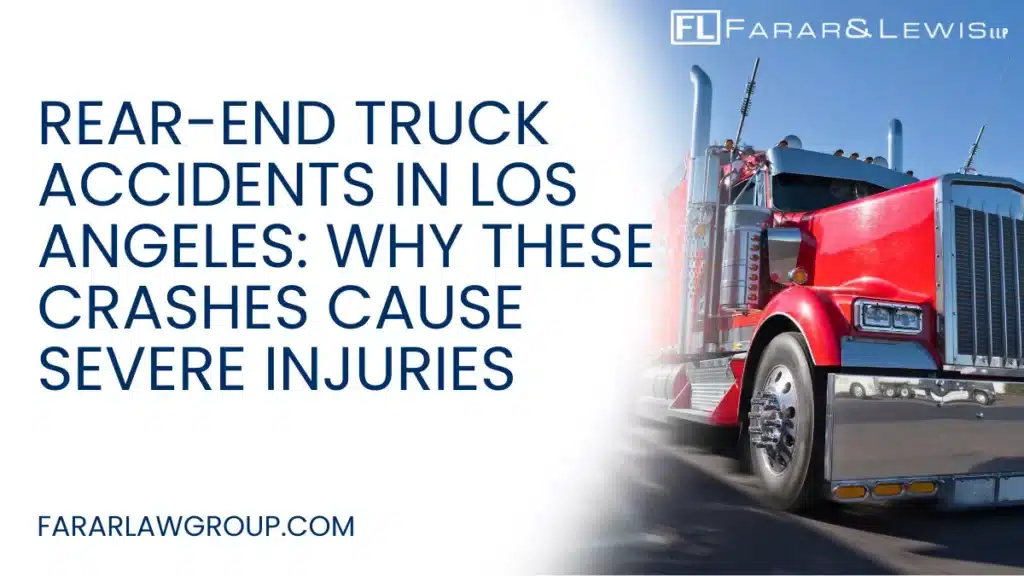
Commercial trucks can weigh up to 80,000 pounds, while most passenger vehicles weigh less than 4,000 pounds. When a truck rear-ends a smaller vehicle, the results are often devastating.
Rear-end truck accidents are especially dangerous because:
- Trucks require much longer stopping distances
- Occupants may be crushed or trapped inside vehicles
- Underride accidents can occur when a car slides beneath a truck
- Chain-reaction collisions are common
- Fatality rates are significantly higher than standard rear-end crashes
Los Angeles traffic congestion and sudden freeway slowdowns make these accidents particularly common.
Common Causes of Rear-End Truck Accidents in Los Angeles
Most rear-end truck accidents are preventable and caused by negligence. Common causes include:
Driver Fatigue
Long hours, overnight routes, and tight delivery schedules can cause truck drivers to fall asleep or experience delayed reaction times.
Distracted Driving
Truck drivers may be distracted by GPS systems, dispatch devices, mobile phones, or in-cab technology.
Speeding or Following Too Closely
Large trucks traveling too fast or tailgating passenger vehicles cannot stop in time when traffic slows.
Brake or Equipment Failure
Poorly maintained braking systems significantly increase stopping distances.
Poor Weather or Road Conditions
Rain, fog, or slick pavement worsen braking performance—especially for heavy trucks.

Where Rear-End Truck Accidents Commonly Occur
In Los Angeles, rear-end truck crashes frequently happen:
- On freeways such as I-5, I-10, I-405, and I-710
- In stop-and-go traffic zones
- Near construction areas
- At freeway interchanges and on-ramps
- During peak rush hour periods
Sudden traffic congestion often leaves passenger vehicles vulnerable.
Injuries Commonly Caused by Rear-End Truck Accidents
Rear-end truck collisions often result in severe or fatal injuries due to crushing force.
Common injuries include:
- Traumatic brain injuries (TBIs)
- Spinal cord injuries and paralysis
- Severe neck and back injuries
- Multiple fractures
- Internal organ damage
- Crush injuries and amputations
- Wrongful death injuries
Victims may face long-term medical treatment, permanent disability, or loss of income.
Who May Be Liable in a Rear-End Truck Accident?
Rear-end truck accident cases often involve multiple liable parties, including:
- The truck driver
- The trucking company
- Maintenance or repair providers
- Cargo loading companies
- Truck or brake manufacturers
- Third-party logistics companies
California follows a pure comparative negligence system, meaning fault may be shared—but identifying all responsible parties is essential to maximizing compensation.
Federal Trucking Regulations and Rear-End Crashes
Truck drivers and trucking companies are governed by strict federal rules enforced by the Federal Motor Carrier Safety Administration (FMCSA). These regulations include:
- Hours-of-service limits
- Mandatory rest breaks
- Vehicle inspection and maintenance requirements
- Driver qualification standards
Violations of FMCSA rules can serve as powerful evidence of negligence in rear-end truck accident cases.
Proving Fault in a Rear-End Truck Accident
Insurance companies often try to shift blame or minimize responsibility. Proving liability may require:
- Driver logbooks and electronic logging device (ELD) data
- Black box and GPS data
- Maintenance and inspection records
- Dashcam or traffic camera footage
- Witness statements
- Accident reconstruction expert testimony
A Los Angeles rear-end truck accident lawyer ensures critical evidence is preserved before it is lost or altered.
Compensation Available to Rear-End Truck Accident Victims
Because injuries are often severe, compensation in rear-end truck accidents may be substantial.
Economic Damages
- Emergency medical treatment
- Hospitalization and surgeries
- Long-term medical care
- Rehabilitation and therapy
- Lost wages
- Loss of future earning capacity
- Vehicle repair or replacement
Non-Economic Damages
- Pain and suffering
- Emotional distress
- Loss of enjoyment of life
- Permanent disability or disfigurement
Punitive Damages
If the truck driver or company engaged in reckless conduct—such as violating safety rules—punitive damages may be awarded.
Why Insurance Companies Fight Rear-End Truck Accident Claims
Trucking companies and insurers often act aggressively to limit financial exposure. They may:
- Dispute fault or braking distance
- Argue sudden stops by passenger vehicles
- Minimize injury severity
- Delay settlement negotiations
An experienced Los Angeles rear-end truck accident lawyer ensures your claim is taken seriously and fully valued.

How Farar & Lewis Handles Rear-End Truck Accident Cases
At Farar & Lewis, we understand how devastating truck accidents can be. Our legal team aggressively investigates rear-end truck crashes and holds powerful trucking companies accountable.
We focus on:
- Preserving critical truck and electronic data
- Identifying all liable parties
- Analyzing federal safety violations
- Working with accident reconstruction experts
- Accurately calculating damages
- Negotiating aggressively with insurers
- Taking cases to trial when necessary
We work on a contingency fee basis, meaning you pay nothing unless we recover compensation for you.
California’s Statute of Limitations for Truck Accidents
Most truck accident injury claims in California must be filed within two years of the crash date. Claims involving government entities or roadway defects may require earlier notice.
Early legal action is essential to protecting your claim.
Call Farar & Lewis After a Rear-End Truck Accident in Los Angeles
If you or a loved one has been injured in a rear-end collision involving a commercial truck, do not let trucking companies or insurers control the narrative.
Contact Farar & Lewis today for a free, no-obligation consultation with a Los Angeles rear-end truck accident lawyer. We are ready to fight for your rights and help you pursue the compensation you deserve.
Sources
- Federal Motor Carrier Safety Administration – Truck Safety Regulations
https://www.fmcsa.dot.gov - National Highway Traffic Safety Administration – Large Truck Crash Data
https://www.nhtsa.gov - Insurance Institute for Highway Safety – Truck Crash Research
https://www.iihs.org